Drawings at the End of the World
I am making this series of watercolours from videos of melting photographs. Because I am painting the moving image the drawings are either densely layered or quick interpretations of the disintegrating photographic images. These are built up over a number of weeks. Watercolour enables you to see through from one layer to the next but with no sense of temporal order.
The photographs are all of natural subjects which I have taken over my lifetime. By drawing the films of their destruction, that I watch over and over again, I am both resusitating what has passed at the same time as watching it be irrevocably destroyed.
Flapping Drawings


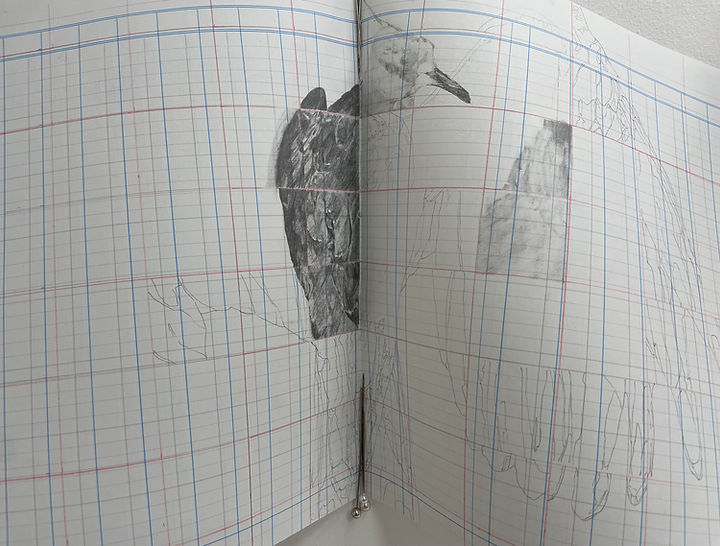
The drawing below was made during a residency at the Viarco Factory, Sâo Joâo de Madeira, Portugal using different forms of graphite manufactured there, on calligraphy exercise books that I had bought in Porto.
The drawings are both a response to the factory itself; grey with accumulated graphite dust, spring light seeping through successive grids of Crittall windows, waiting in expectant silence before a delivery, combined with project about birds that I carried from home in the back of my mind.
The drawing depicts one windowpane, experienced through different drawing approaches. The textured glass of the window obscured any view of outside from where I worked. Instead, I was affected by the birds I could not see: the sounds of unseen house sparrows in the yard below and swifts, the roaming marks in the sky of the previous evening.
The work continues to explore a metaphor between book pages and birds, the flapping page of a double page spread, fixed on the spine, recalls the symmetry and motion of a bird's outstretched wings. The fluttering marks used to draw the windowpane combine explicit and implied, conscious and unconscious references to the birds and their movement.


Uncollecting




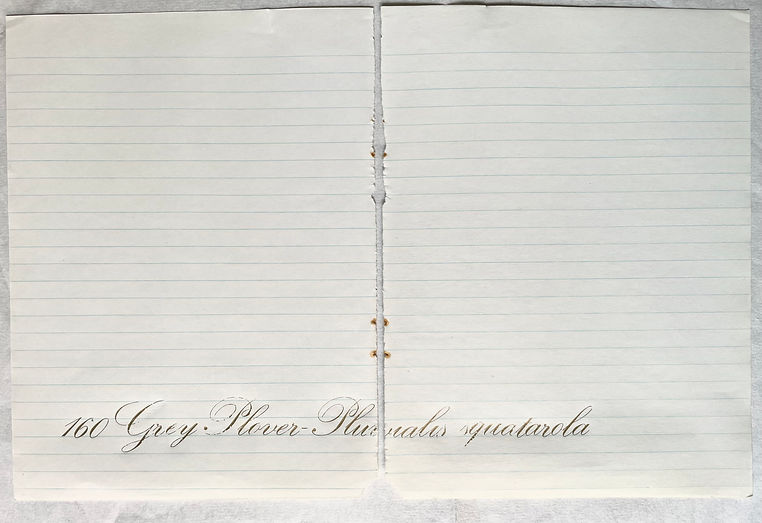
The Uncollecting drawings explore my anxiety about cultivated indifference towards nature and what might result from this, referencing the visual language of Victorian/Edwardian museums and memorials.
It conflates concurrent events in Suffolk, where I live; the removal of the Ogilvie Bird Collection from Ipswich Museum and the devastation of natural habitats near Leiston (where many of the bird specimens were shot in the Edwardian era) in order to build Sizewell C nuclear power station.
*******************************************************************************************************
The finest bird specimens were shot and stuffed in glass cases and displayed in the museum. But the glass cases were too substantial and had to be replaced by digital screens. The screens needed electricity meaning more power stations were built to enable the universal use of digital devices. To make room for the power stations the habitats of multiple bird species were destroyed.
Today, birds no longer exist but we know what they were like from our digital records.